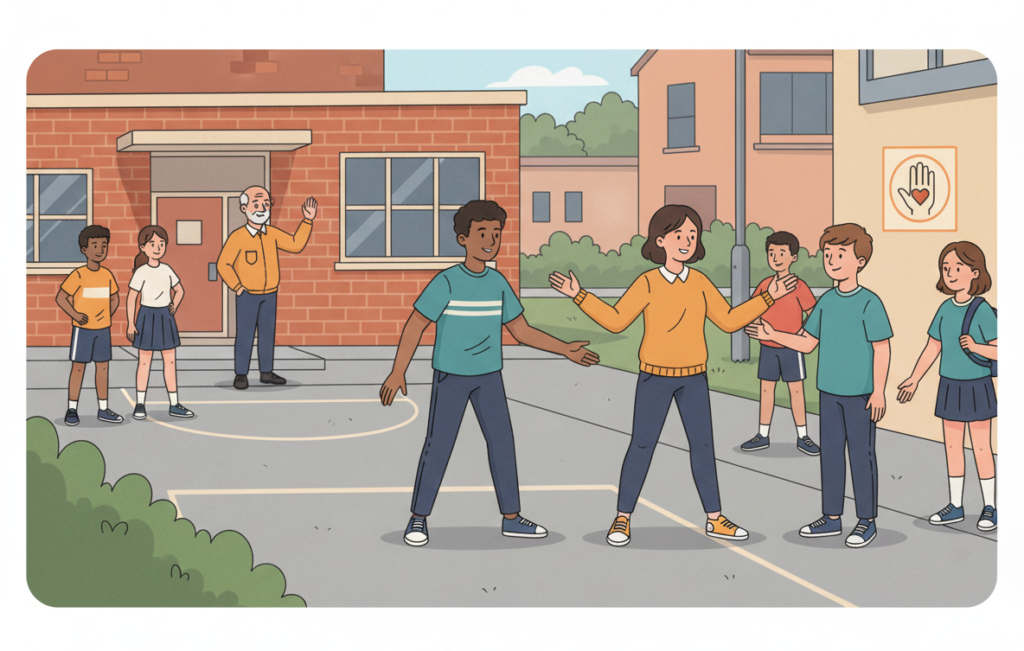
At the small neighborhood school, the janitor knows your name and the playground teams form calmly. When you move up to middle school, everyone watches each other: the older kids can tell at a glance if something is wrong and need to take action.
In my previous schools, there was no real bullying. If a student started with name-calling or pushing and shoving, the older ones would intervene immediately, speaking firmly but without being violent. They would stand nearby to listen and separate whoever was needed to prevent the problem from escalating. The rumors never became big because no one gave them any play. That way we felt protected: no one was left alone or bullied.
– “What’s wrong, why are you pushing?”
– “It’s nothing, we’re leaving.”
– “No, we talked about it. No one stays here alone.”
How do you move that protective culture to a larger facility without falling into intimidating “vigilantes”? Devise a plan:
1. now (30 days): cross-course sponsorship, visible help points, shared cut-off sign (“Stop: we care here”).
2. Clear roles: “seniors” trained as mediators, not police; fast channel with teachers.
3. Structural: classroom agreements, case follow-up, active witness campaigns and quarterly climate assessment.
Roles at the table: student narrator, older student mediator, potential aggressor, witness, tutor, management team.