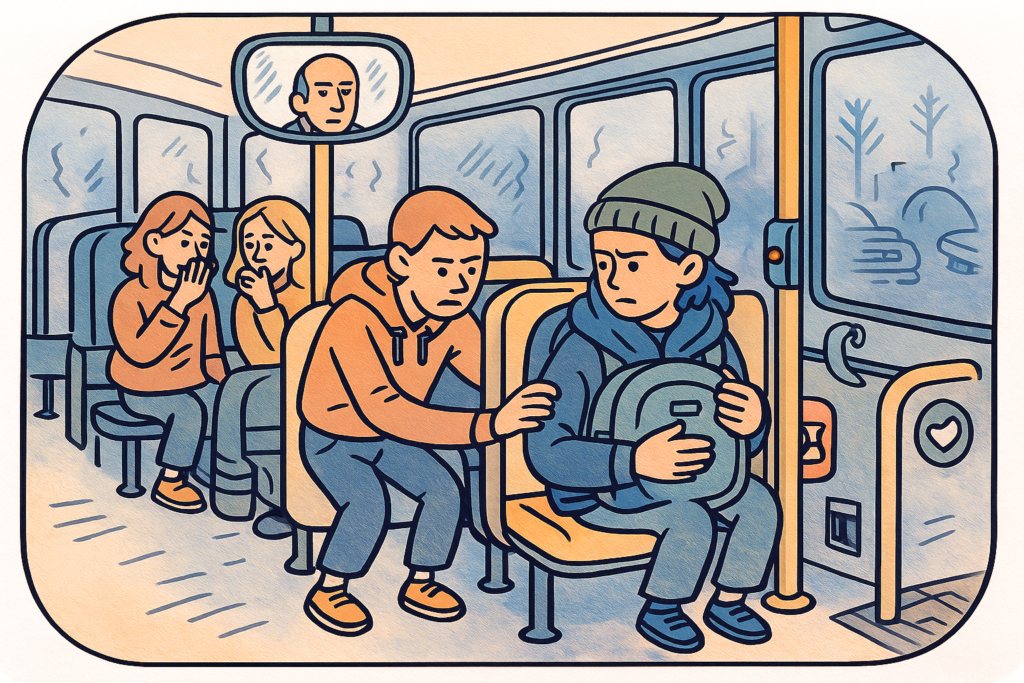
It was a cold morning. The bus was rattling and fogging up the windows; the seats were shaking as it passed through the traffic circle. Behind it, two low voices were spouting words that pricked like pins, and you felt the weight of your cell phone in your pocket, as if you were guarding a newfound secret.
In fifth grade, while you were on your way to school, you heard two girls talking badly about your best friend. When you arrived, you went straight to tell them because you felt it was your duty to tell them the truth. The next morning, all the girls – and their group – knew that you had spoken. You heard laughter from behind you; a boy tried to take your backpack. You entered the center holding back tears and decided to tell everything to the CPE (tutoring/coexistence office). After that step, the girls decided to ignore you: the rumor cooled down, but left a trail of cold and loneliness.
– “Did you tell her everything, you snitch?”
– “Leave my backpack.”
– “Talking is not betraying; it’s caring when someone is gone.”
As you, the affected friend or the CPE, design a two-stroke response:
1. now (48 h): safe seat near the driver, change of route/company if possible, written report of incident (time, line, names), notice to families and observation at stop; clear message: “no retaliation”.
2. Next 2 weeks: brief, optional mediation to cut rumor, verifiable agreements (no contact, no teasing), “courageous witness” campaign in class-group and support point in mornings.
Table roles: witness storyteller, defamed friend, girl 1 and girl 2, boy trying the backpack, driver, CPE/tutoring.