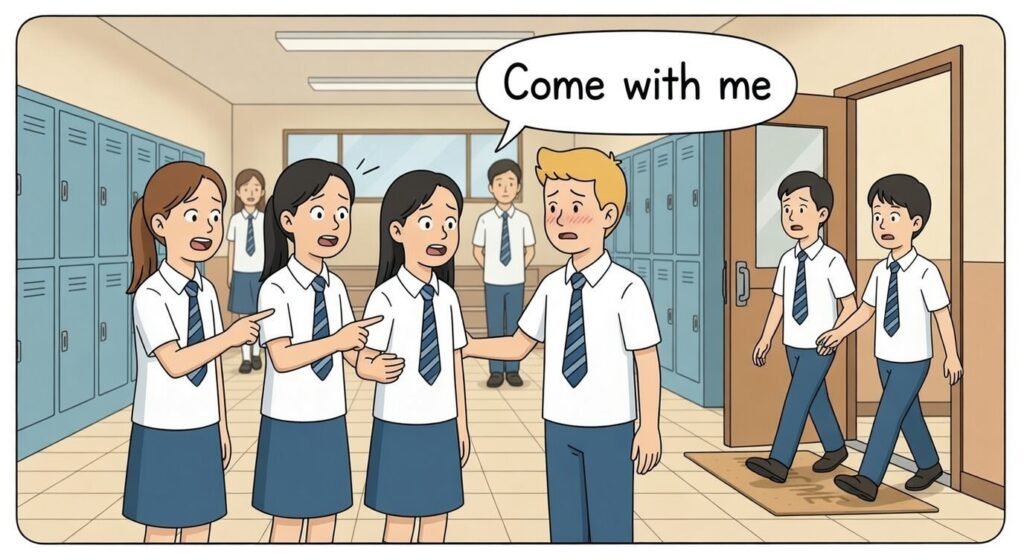
It was the change of class. The lockers seemed to breathe like accordions and the fluorescent light was making noise, filling all the silences. In the hallway, a circle of backpacks was closing too tightly. The classroom door remained half open, as if hesitating whether to let out or lock in.
I see a classmate surrounded: thin laughter and comments always pointing to the same thing. I look around and no one intervenes. I feel the knot in my stomach and decide to approach. “Come with me,” I tell her, and I break the circle using my body, without fighting or shouting. I walk her to the door and breathe, naming what I saw before the others. Then we go to the CPE together and I tell her quickly what happened, without embellishing anything. I don’t stay quiet when someone is suffering, even if I’m a little shaky; I don’t turn away.
– “We were just playing.”
– “If one laughs and another cringes, it’s not play.”
– “Come on, let’s get out of here.”
I’m another student watching from the door.
1. Now (10 s): I stand next to her and say clearly, “Give her some space.”
2. Extraction (1-2 min): I make my way to the door and ask if she wants accompaniment to CPE/tutoring.
3. Naming without a fight: “What you are doing is harassment: repeated comments and fencing her in. We stop here.
4. Digital network: I cut the gossip in the group (“don’t forward, delete”).
5. Follow-up (24 h): record what has been seen with time/place; I look for another ally so that there are no reprisals.
6. Week 1: I propose in class an active witness agreement and an “open chair” at recess for those who need company.
Roles at table: bystander intervention, bullied classmate, group leader, follower, hallway teacher, CPE/tutoring, silent ally.