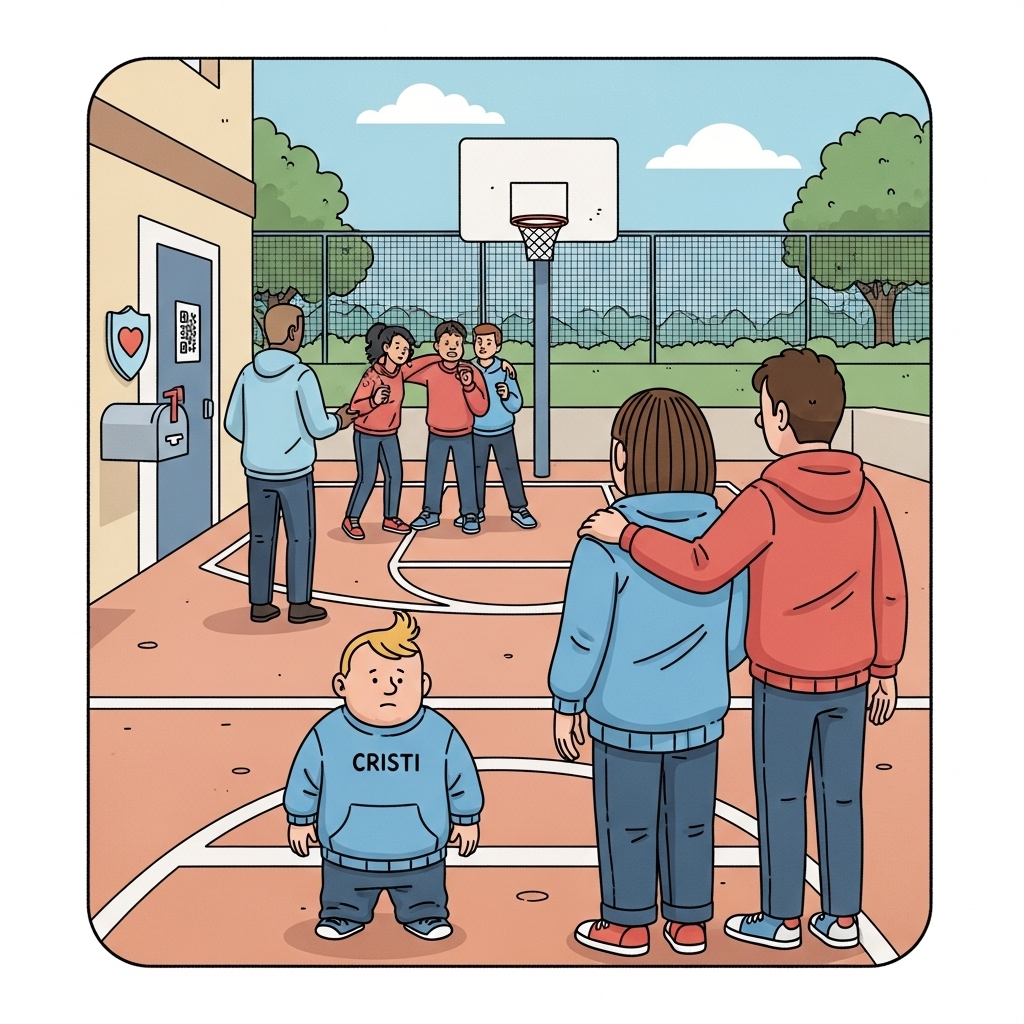
It’s afternoon on the playground. A group of older boys take over the basket; the floor smells of rubber and competition. Cristi, smaller and wearing a wide sweatshirt, knows perfectly well when a smile is not sincere: that tone that lowers anyone and it is not even necessary to push.
Since he was little and “smart”, Cristi has learned to read contempt in the looks and comments of others. And he has also swallowed another bad rule: “Never go with the teacher, that’s for snitches”.
For this reason, she endured many blows and taunts-for her body, for her size-she endured them in silence. She ate her tears and learned to heal her wounds on her own.
But the time came to stand up to them: first she did it by saying “enough” with clear words, sometimes she had to defend herself strongly.
Above all, Cristi understood that asking for help does not make you weak. In fact, if you open the door to your family, teachers or classmates, they can be the net that lifts you up.
– “The smarty pants again?”
– “Smart yes, squishy no. Respect me.”
– “Are you going to tell on me?”
– “I’m going to take care of myself. And if necessary, yes: I’ll ask for help”.
If I were your partner today, here’s how I’d break it down:
Right now (10 s): I stand next to you and say loudly for everyone: “Enough belittling! No one here is less, no one here is taken care of.”
What do you need: I ask you if you prefer to talk to the tutor or to counseling; we go together wherever you choose.
Breaking the “no snitching”: If I hear the typical “that’s snitching,” I respond, “It’s not snitching, it’s seeking safety.” I propose to the tutor that we put up a clear sign in the classroom and a QR mailbox to ask for help without fear.
Form a team: I look for two or three other classmates so that I don’t leave you alone at recess or in the hallways.
If there is a physical threat: We don’t look for trouble; we call an adult (teacher, janitor) and go to a safe area without being heroes.
This week: We ask for clarity in class: no body teasing, no “anti-snitch” rules. If someone hurts, there are consequences; if someone asks for help, we must listen and repair.
So, instead of standing by and watching-or putting up with the law of silence-we create a network so that no one has to heal alone and that asking for help is a reason for respect, not ridicule.
Roles at the table: Cristi, allied partner (narrator), bullying elder, chorus of followers, tutor, guidance/CPE, delegate.