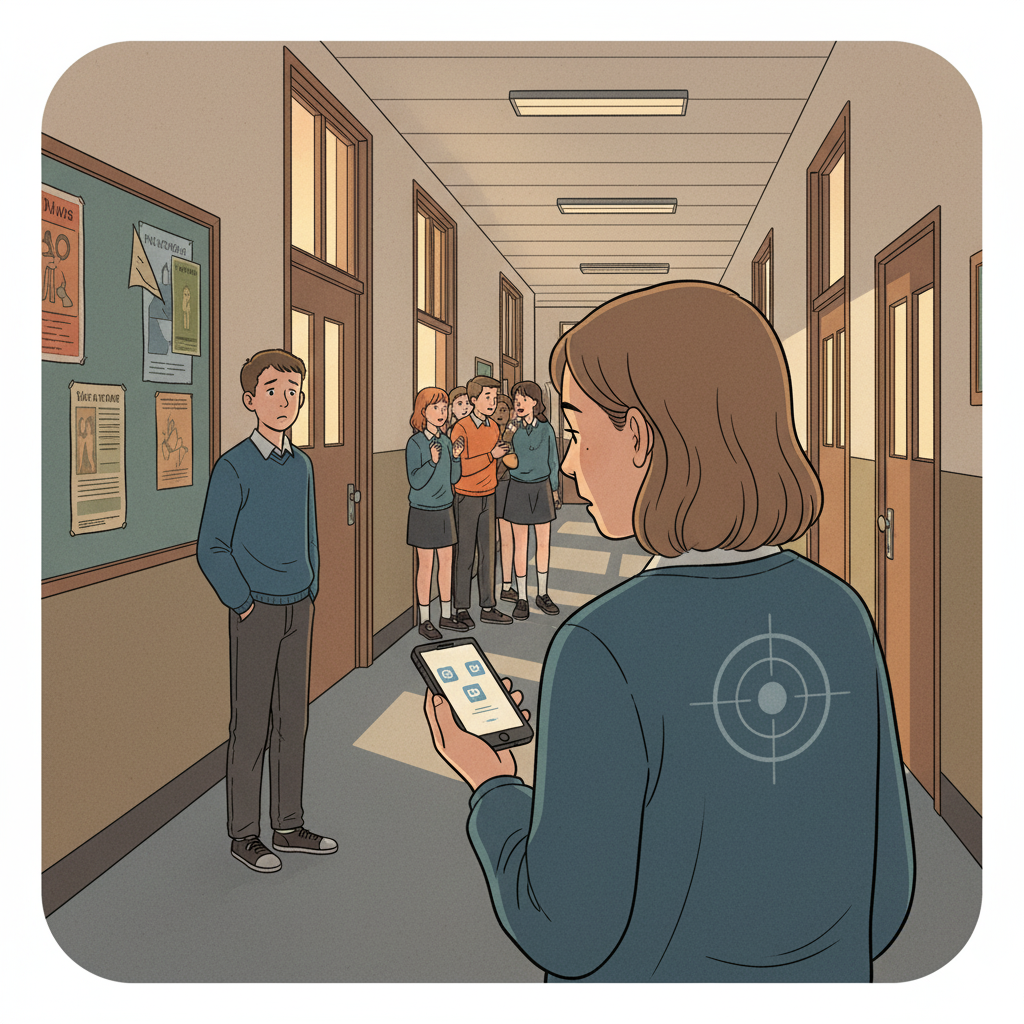
It was the last term in high school. In the corridors, there was not only the sound of footsteps, but also rumors coming through cell phones: “Have you heard what they are saying about…?
It started all of a sudden. Colleagues and adults accuse you of harassing a boy with whom you have never really spoken. They call you to offices to ask you the same questions over and over again, they label you as guilty without any proof. No one listens to your side, they don’t even explain what you supposedly did. You feel that everyone looks at you differently, and even if you ask questions, no one answers with concrete facts. In the end, you are marked by the rumor and begin to feel the isolation and bullying: not because of what you did, but because of a false accusation.
– “I haven’t talked to him, what proof do you have?”
– “What’s important is how he feels.”
– “Why are you blaming me without listening to me?”
What would you do as a participant if you are within the group?
Possible performance:
1. Fact check (48-72 h):
– Ask for timeline and evidence from both parties; record who, when, where.
– Symmetrical non-contact while clearing up; emotional support for both (guardian/counseling).
– Record in writing (brief minutes) and appoint a neutral mediator.
2. Restorative meeting (if both parties agree):
– Clear rules: listening, no interruptions, speaking in the first person.
– Objective: differentiate rumor from fact, recognize impacts and reach verifiable agreements (no contact, network limits, active witnesses).
– If there was no harassment: make it explicit that there is no guilt and close with a care plan.
3. Communication and follow-up (2-4 weeks):
– Institutional denial without exposing anyone: “after review, there is no basis for the accusation”.
– Reminder of anti-rumor protocol and confidential channel.
– Review at 2 and 4 weeks (classroom/yard/networks) and support if rumor reappears.
Roles at table: accused person, targeted child, tutor, school mediator, playground supervisor, rumor initiator, witness.