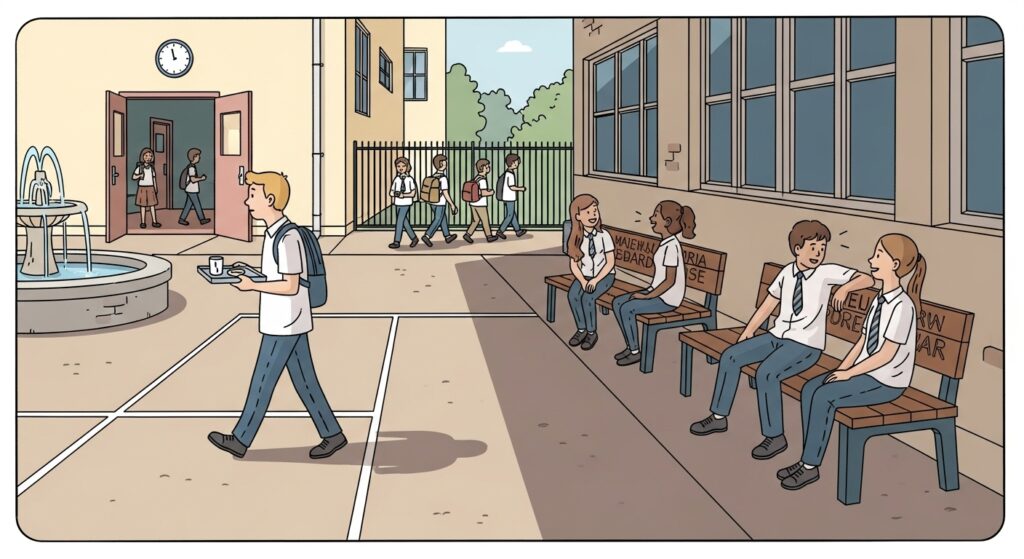
It was a gray afternoon downtown. In the direction, the light from the tubes made long shadows on open folders. The hallway smelled of rain and freshly used pens. The cell phone vibrated and, as you approached, you noticed that the laughter of the others was suddenly muffled, as if they were turning down the volume just so you couldn’t hear them.
It all started with a label: “bully”. That word was repeated for months, but you were never allowed to tell your story properly. The teachers and the management kept pushing, getting stricter and stricter, but without listening to all those who really knew what had happened. The rumor grew, it was sticking to your days and would not leave you alone, neither in the hallway nor in class.
And then came the worst: your boyfriend started bullying and threatening you. A friend wanted to take your side and also ended up receiving threats and even beatings. Underneath all this, there was something older: since you were little, in elementary and high school, you always heard jokes and weird looks because of the color of your skin. They said “it’s just humor”, but for you it was a wound that made you want to speak more and more quietly, without being heard.
Now everything was mixed up: an unfair accusation, intimate partner violence and racism that never healed.
– “Listen to our side.”
– “We’re not here to debate.”
– “If I tell, will you believe me?”
– “If you talk about me again, you’ll find out.”
– “Where are you from… really?”
– “From here. And my name is said well.”
As a peer, delegate or tutor, what would you do this week to reconnect without forcing? Design:
1. today: concrete invitation (table, pair work), “open chair” rule in the group.
2. 48 h: micro-circle with 3-4 friends to name what happened and agree on minimum sustainable gestures.
3. 30 days: rituals of belonging (club/activity, useful course roles) and follow-up.
Roles at the table: isolated narrator, ex-friend leader, undecided follower, allied partner, tutor, counselor.