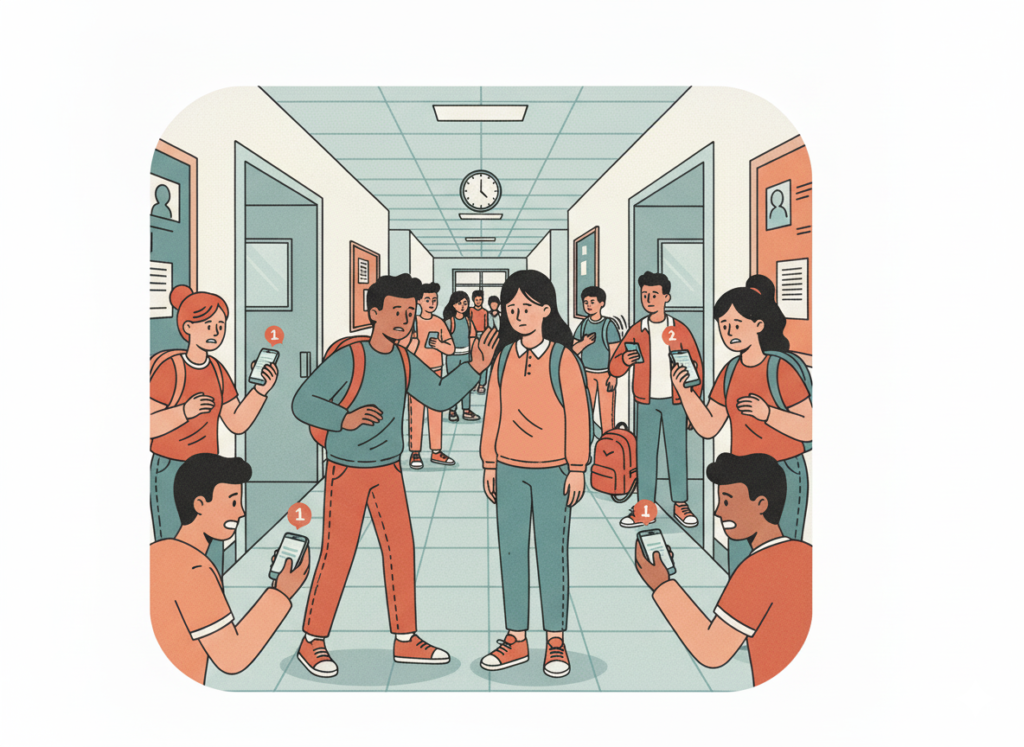
It was the change of classes and the hallway was filled with backpacks and the sound of cell phone notifications. In one corner, two people were arguing loudly and the WhatsApp group kept pumping out offensive messages.
Once again you see bullying in action: jokes that start out “funny” but turn into insults. The group surrounds the victim, leaving her alone and isolated. You stand next to her and, before things get worse, you name what is happening and propose to stop and talk about it without shouting. You know they may say “stay out of it” or make fun of you, but you choose to intervene and protect, even at the risk of being criticized by some. These are crucial seconds, because the adult has not yet arrived.
– “Stop it, this is bullying and it’s not funny.”
– “And who are you to boss around?”
– “Someone who doesn’t allow bullying. If there’s a problem, we talk respectfully.”
Design a 5-step bystander micro-protocol:
(1) assess risk and stand with the victim;
(2) name the behavior, not the person;
(3) redirect (“let’s change the subject/space”);
(4) recruit allies and document if it continues;
(5) refer to adult/mediation and watch your own stress afterwards. What would you say in 10 seconds? What would you do in 24 h?
Table roles: active witness (narrator), victim, verbal aggressor, friend of aggressor, silent witness, teacher/mediator.