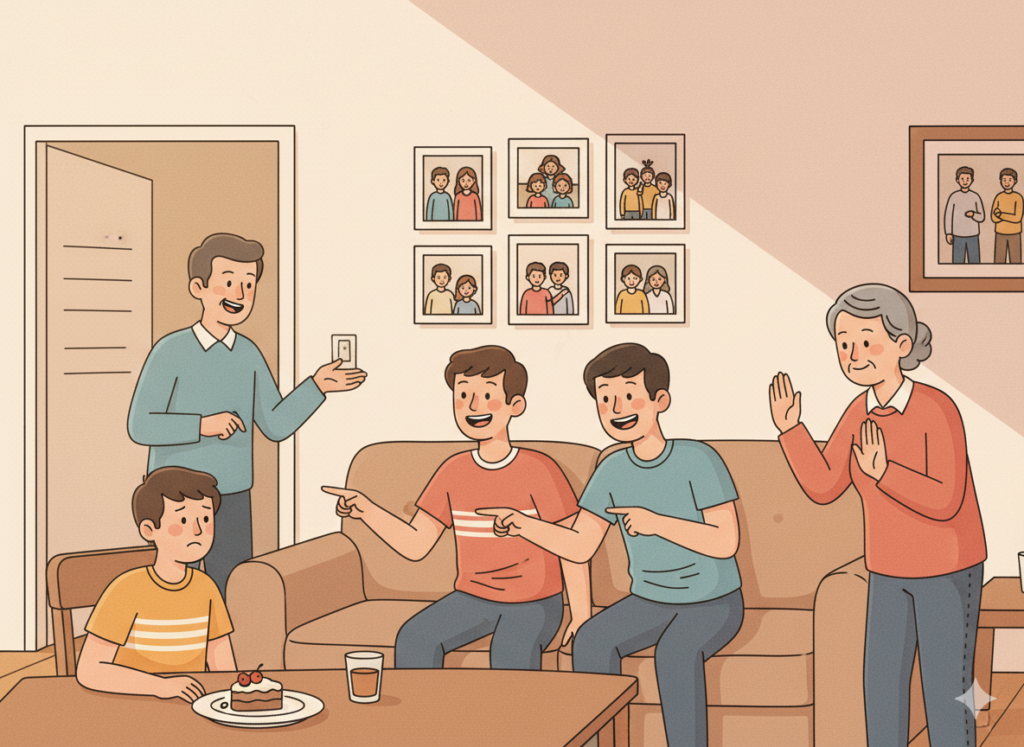
It’s Sunday afternoon. The living room smells of home cooking and the same old sofa. On the door are the height marks of the whole family, and there you can see that you are the only short one.
You were always the shortest of all. Your brothers used to tell you “You must be adopted, you are so short”. On the outside you laughed so they wouldn’t call you “sensitive” or make you feel weird, but inside it really hurt. One day you decided to tell your parents and they told you it was just a joke, that you shouldn’t take it the wrong way. Now that you are older, every time there is a family meal they come back with the same phrase and every time it hurts the same. Nobody wants to hurt you, but nobody puts an end to the bullying that hides behind “humor”.
– “You’re adopted, look how short you are.”
– “It’s not funny, it really hurts.”
– “Come on, it’s just a joke.”
– “When it hurts, it’s no longer a joke.”
As an older sibling, parent or ally at the table, how do you turn “it was just a joke” into caring? Design:
1. now (next meal): stop the joke without humiliating (“stop: it’s not funny to him”), validate the feeling, agree on a cut-off word for the humor.
2. Repair: brief family circle (listen for impact, concrete apology, agreement: no identity/body in jokes).
3. Structural: “humor code” at home (clear boundaries and consequences), recognition turns (say something we admire), and revise the “growth meter” ritual so that it measures achievement, not stature.
Table roles: younger sibling (narrator), teasing older sibling, supportive second sibling, minimizing mother/father, allied aunt/grandparent, witnessing guest friend.