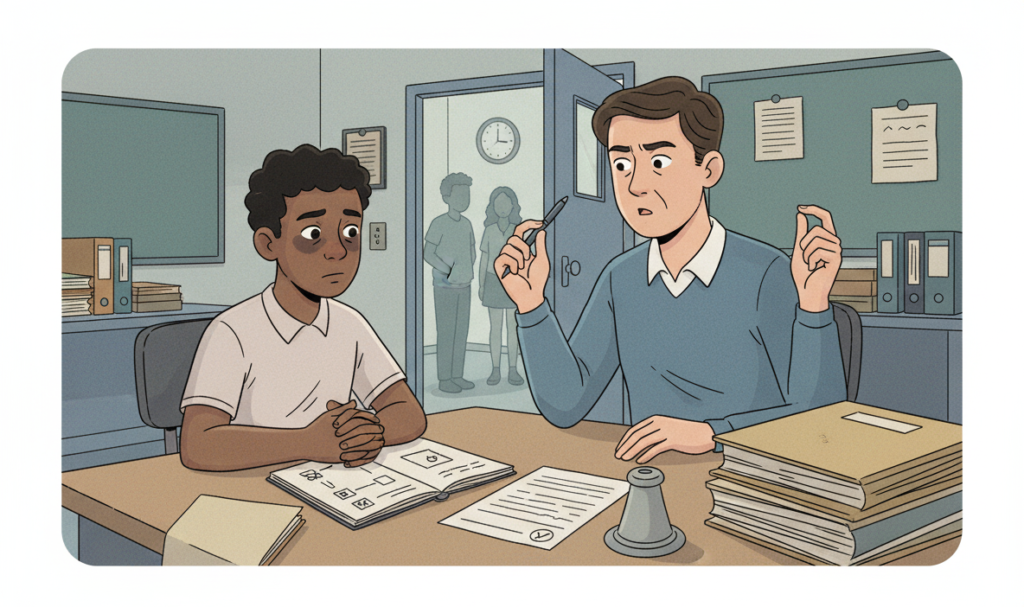
It was a gray day in the guidance office. The light was cold, there were folders everywhere, and the chair looked like it was going to break at any moment. Outside, students were coming and going between classes, but inside the atmosphere was charged with tension.
We were accused of being “stalkers” without even hearing our side of the story. We only received closed questions and looks full of suspicion. They said “cooperate and we’ll finish quickly”, but they never let us tell how things really happened. Every day the atmosphere became harsher: nobody talked to us, they checked our messages, called meetings without a mediator. The label and the rumor stuck to our name, and no one cared about how we were doing. I ended up with insomnia and depression, out of fear and anguish. We asked for serious investigation, but what we got was a quick judgment and a half-baked protocol. The most painful thing was feeling that there was never any care.
– “We just ask that they hear our side.”
– “This is not the time to debate, we just want to prevent.”
– “Preventing without listening hurts us.”
If you were tutor, management or mediator, how do you ensure truth and care at the same time? Propose:
1. now (72 h): pause punitive process, risk and wellness assessment (mental health included), symmetrical no-contact plan, evidence gathering and timeline with both parties.
2. Reparation: if the accusation is unfounded, institutional denial (without exposing), responsible apology, psychological accompaniment and safe re-entry plan.
Structural: “do no harm” protocol (trauma-trained adults), independent student advocate, anonymous channels, case review every 30 days and active witness training.
Roles at the table: accused student, co-defendants, accuser, tutor, counselor, management team, family ally, witness.