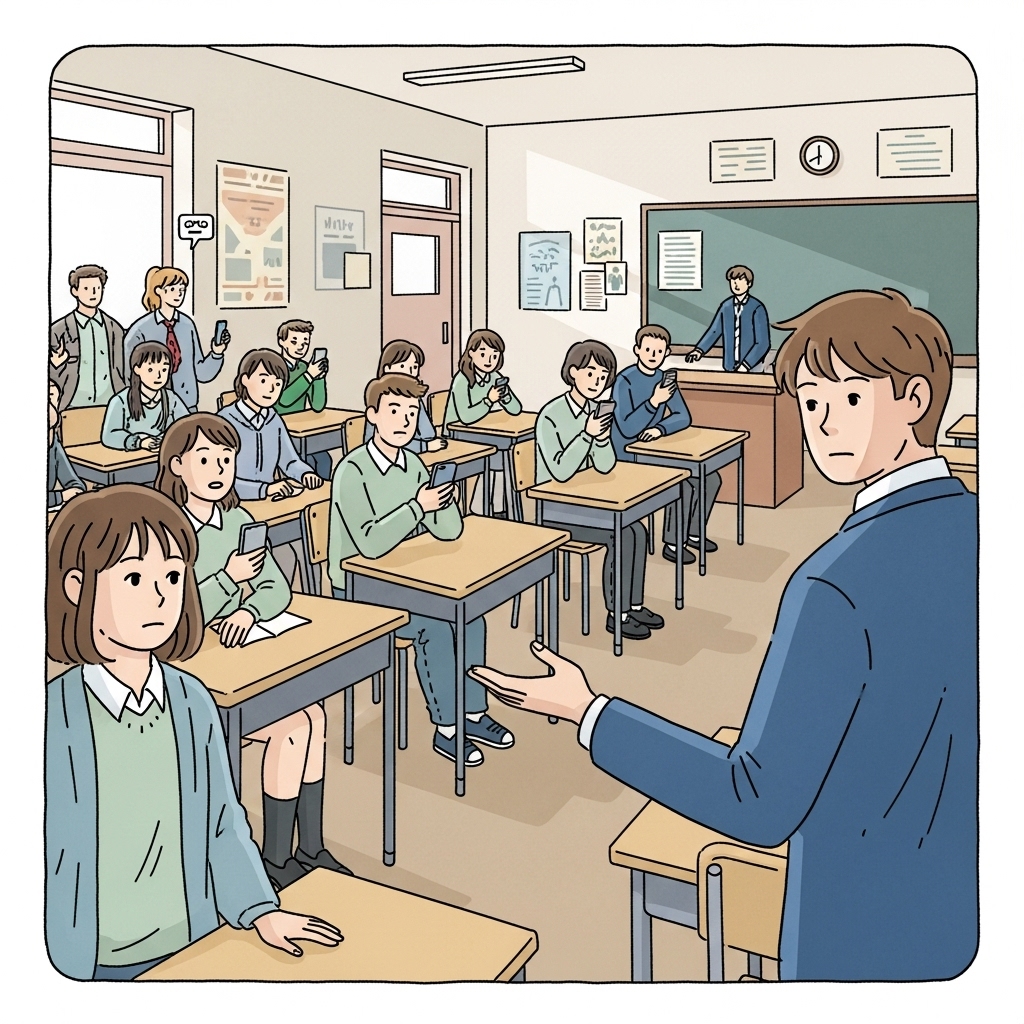
It’s the first weeks of school. The classroom smells of marker and freshly lined books. After a discussion, the desks look like trenches and a semicircle of classmates huddle together; the door is half open, as if it were a timid exit for someone left alone.
After a clash between two pupils, the class takes sides. Almost everyone sides with one of them, while the one who has just arrived at school is left alone, with her back to the wall of whispers and laughter. The memes and group chat messages burn, and the stares in class complete the exclusion. For the newcomer, integrating is an uphill struggle: every time she tries to speak, someone responds with mockery or silence.
– “Look, if you don’t like it, go with your own kind.”
– “It was a discussion, not a people’s jury.”
– “Give her space: you’re not voting her place in the class.”
I’m another student and I decide to intervene.
1. Now (10 s): I stand next to him and say clearly, “Give him space. We stop here.
2. Safe exit: I walk her to the door and ask if she wants to go to tutoring with me.
3. I cut the chorus effect: “We’re not sides; it was a disagreement. No teasing or memes.
4. Group chat: I write “don’t forward, delete” and ask for two allies to hold it.
5. Integration bridge (48 h): I invite her to sit with us and propose to work in mixed pairs.
6. With the tutor: I ask for a minute to set rules: no cornering, no voting on belongings, no memes about classmates.
Week 1: I organize a short activity where everyone presents something of their own (hobby, music) to open doors without labels.
Roles at the table: new student (target), student supported by the group, follower, peer witness (narrator), ally, tutor/teacher, delegate.