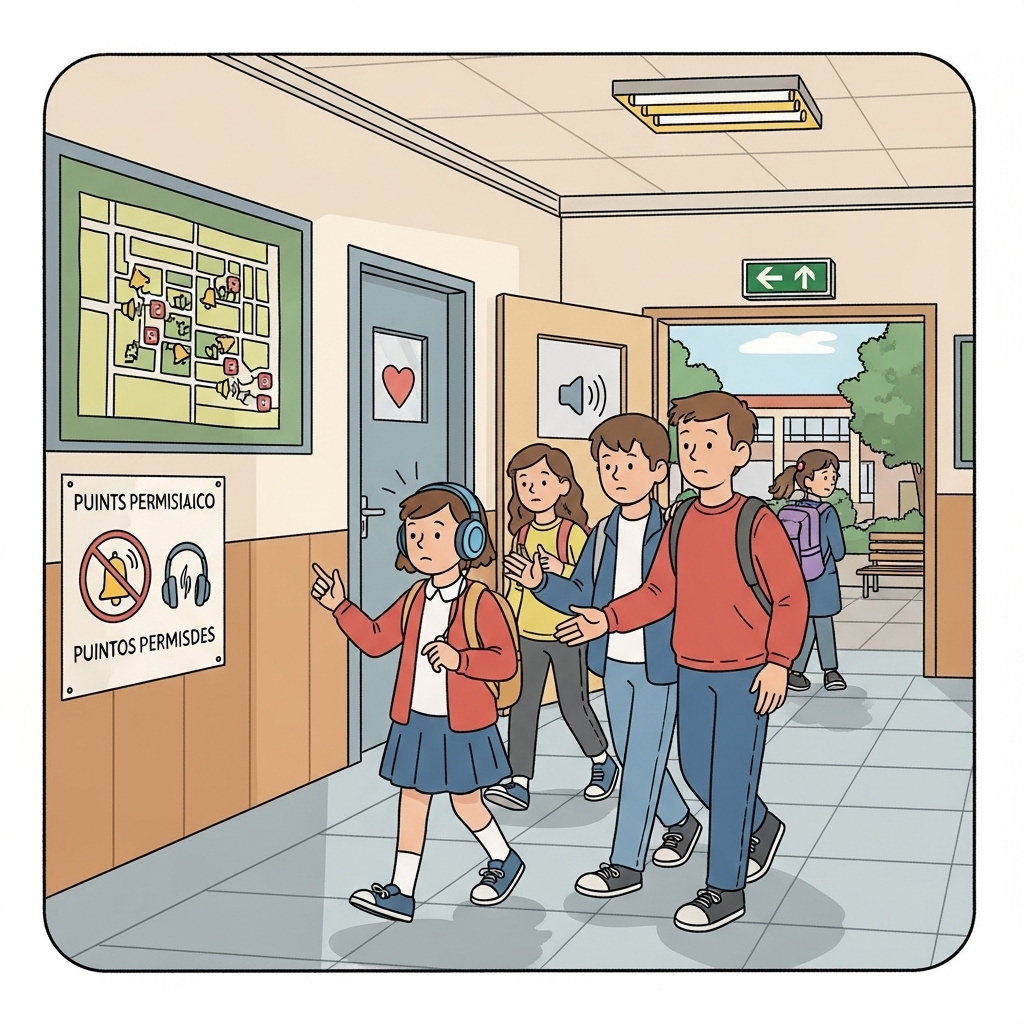
It is the first quarter of ESO. The bell honks and the lights vibrate overhead. He crosses the hallway with helmets on – they protect him from the noise – and calms himself by making small gestures with his hands. The courtyard looks like a stadium with a hundred conversations going on at the same time.
At first only one of them bothered him – the typical troublemaker – but soon his childhood best friend joins in, to make him even angrier. Now it’s all teasing, insults, pushing and shoving. At home they try not to make a big deal out of it, but other families begin to notice that something is going on. Fortunately, the psychologist encourages him to tell; she confirms that there is a group that is harassing him.
The tutor and the headmaster get active: now they don’t leave him alone between classes and call the families of the aggressors. The tension is down… but he is still alone in the playground, barely talking to two classmates. His differences – not picking up double jokes, not liking laughter games, being very sensitive to noise – end up being a target. The day doesn’t weigh as much, but it still hurts.
– “I was joking, don’t be like that.”
– “If I don’t get it and it hurts me, it’s no longer a joke.”
– “Let him be, he needs his helmets to be calm.”
If I’m his partner and I’m acting today:
Now (10 s): I plant myself next to him when he’s being picked on and say loudly, “Enough! No teasing or pushing. I go with you wherever you feel comfortable.
Bridge (24-48 h): I tell the tutor to form a rotating support pair in the playground and to keep the bullying group away from him.
Noise and rules: I propose map of noisy places and that she can put helmets wherever she wants. We use “Stop: we care” to stop jokes and teasing.
Accessible play: I include him in activities with clear rules and, if there is a funny joke, I explain it quietly.
If they repeat: I record when and where it happens and we tell it with another witness to Guidance. If he/she wants, we make a restorative circle: listening, apology and agreements.
Month 1: We ask for a talk about autism and noise sensitivity (with him or without exposing him) and a quiet corner in the playground.
This makes it clear: being different is not an excuse for bullying. If you show your face, you break the cycle and really help. Asking for help and caring for someone counts much more than looking the other way.Adapted and direct story for teenagers, showing bullying and how to change things from support:
Table roles: autistic student (protagonist), initial aggressor, ex-aggressor friend, followers, peer ally (narrator), tutor, psychologist/guidance, pedagogical direction.