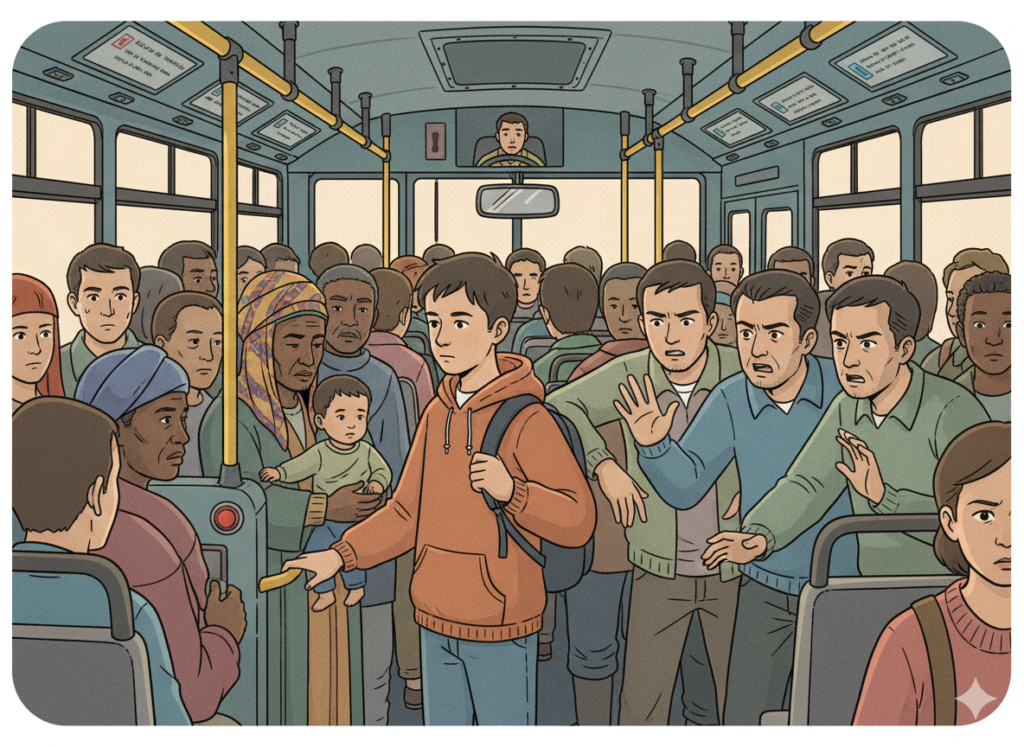
It was a very hot afternoon. The bus shelter was vibrating every time a truck passed by and everyone was impatiently waiting for the bus. When we got inside, the atmosphere was tense and a bit agitated.
The bus was full and, suddenly, a sudden stop made everyone push and shouting started. A group of men began to insult and make it clear that they did not want a person near them because “”he was not from here””. They blocked his way and demanded priority, using ugly words and gestures. The driver tried to calm the chaos, but the insults continued and the hateful looks focused more and more on this different person. Nobody did anything: exclusion and aggression were evident.
– “”Get out of the way, we’re in charge here!””
– “”What do you think you are, foreigner? Go back to your country.””
– “”Don’t push, please…””
– “”Shut up! Here you do what we say.””
I am an underage student riding that bus and I act without putting myself at risk:
Structural change (I would propose it as a student to the operator):
– clear priority and anti-hate signs in several languages
– extended stop protocol and safe corridor
– basic mediation training for drivers
– improved frequencies
– stops with more space
-WhatsApp line for incidents visible on the bus.
Roles at the table: non-local person (hate target), male aggressor, driver, female passenger ally, passive witness, conductor/security, new passenger arriving.