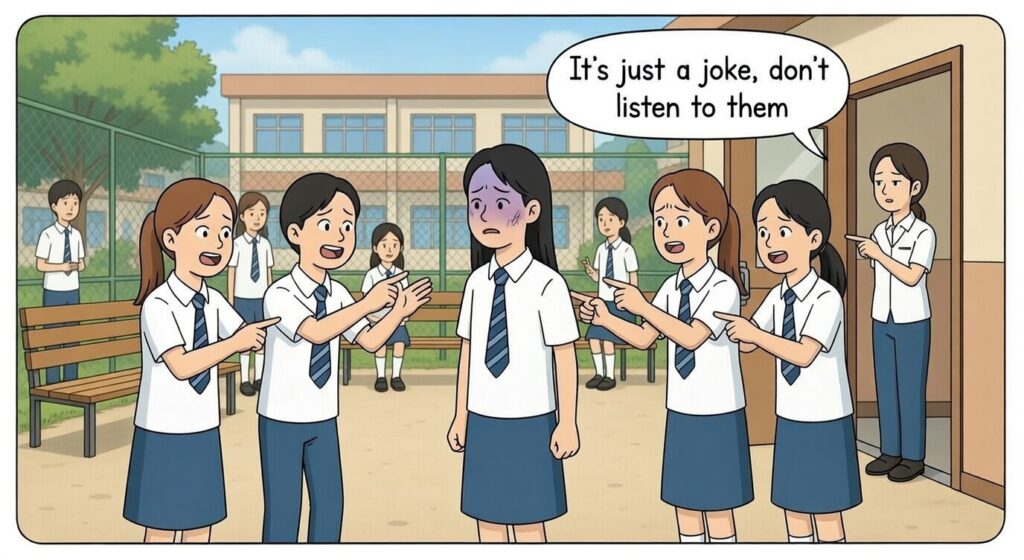
Every day in the first weeks in another country, the classroom smells of machine coffee and books fresh from the plastic; classmates’ names sound strange and hard to remember. In the hallway there is a map with pushpins marking “where we come from.” Every time you speak, your accent becomes the focus of attention.
The teasing starts with your clothes, then with how you pronounce words, and ends with “your weird way of being”. They laugh, imitate you and correct you as if it were a game. When you look to a teacher for help, you get a wall: “It’s just a joke, don’t listen to them”. You feel that the door that closed was not just the door to the classroom, but to the care you needed. You return to class with cold hands and a head full of doubts.
– “We’re just kidding, relax.”
– “My accent is no joke.”
– “Don’t think about it, it’s okay.”
– “Yes it is, it’s happening to me.”
I’m your partner and I don’t want this to go on.
1. Now (10 s): I sit next to you and say clearly: “Stop imitating. Here we respect accents and styles”.
2. Bridge: I ask you how you want me to accompany you (support partner, go to tutoring together).
3. Class: I ask for 1 minute to agree on rules of engagement (no imitations or “jokes” about origin/clothes).
4. Networking: cut the meme in the group (“do not forward, delete”).
5. 24 h: record time/place and take a report with two allies to tutoring.
6. Week 1: organize with those who want a mini “map of accents” to celebrate our ways of speaking (voluntary), and propose to the teacher a reminder of anti-hate protocol.
Roles at table: newcomer student, fellow ally (narrator), lead impersonator, chorus of laughter, minimizing teacher, tutoring/CPE, other international student.