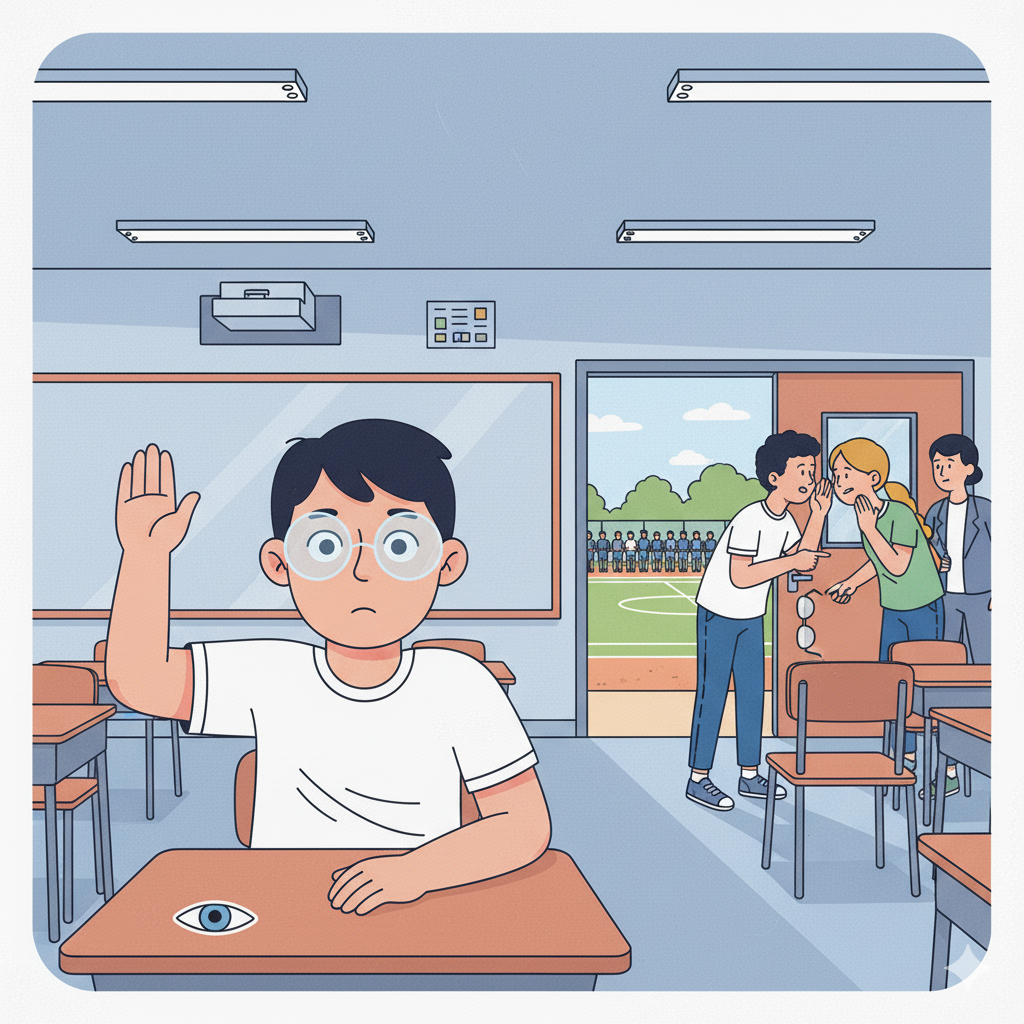
It was the sixth grade classroom. The lights were cold and it smelled of fresh chalk. The front row desk was always for me, and as I entered my glasses fogged up from the change in temperature. In the courtyard row, people like me were never chosen to start the games.
I was bullied because of my eyesight and my size. They called me names and made fun of me because sometimes I couldn’t see the blackboard well. They hid my glasses and moved me around saying it was “a game”. In line and in the playground they pushed me and called me names; in physical education I was always the last one to form a team. I learned to shut up and try to be inconspicuous, but it hurt a lot inside. The teacher noticed something, but most of the teasing happened when she wasn’t looking.
– “No glasses again, little boy?”
– “Leave him alone, he never sees anything.”
– “I don’t need teasing; I need respect.”
As a peer, delegate or teacher, what would you do today to cut through the teasing without further exposing the student? Propose:
1. immediate (7 days): clear signal against teasing, reading turns with props (board photo, copies), “prop partners” chosen by teacher.
2. Restorative: guided conversation with those who tease, acknowledgement of harm and verifiable agreements.
3. Structural: random team selection, “asking for help is not cheating” signs, seating checks so that seeing well does not mean being “in the spotlight”.
Table roles: student narrator, teasing leader, follower, friend ally, teacher, delegate.