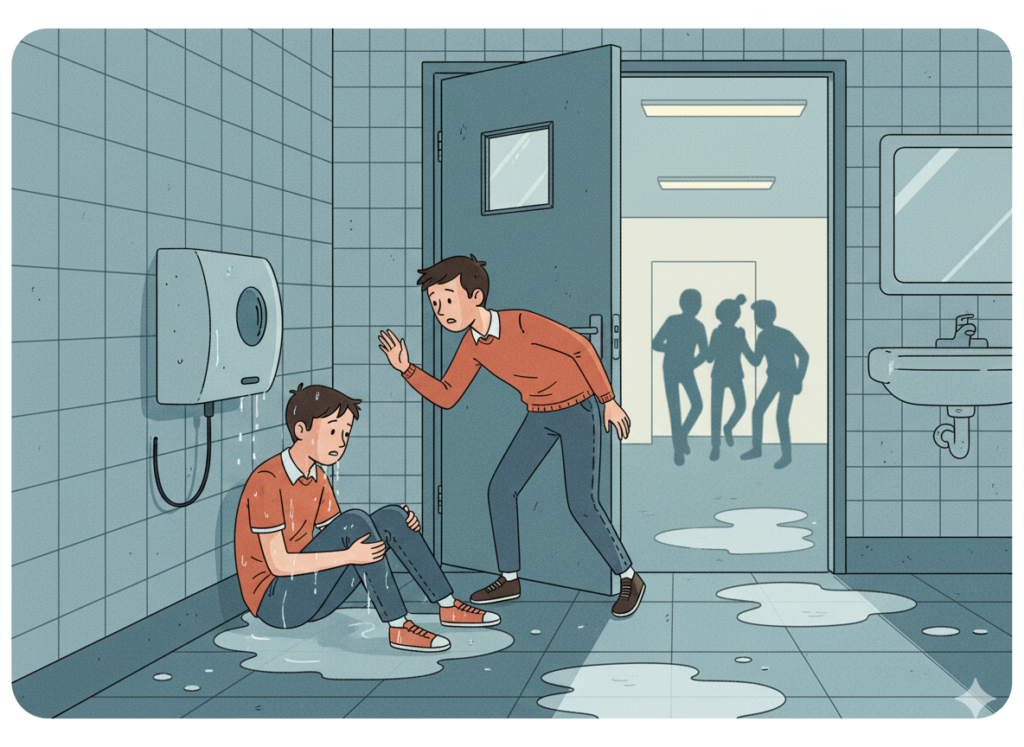
It was late at the center. The bathrooms were cold, with white light and that strong smell of bleach. The hallway was completely empty, and when you walked in, the door closed behind you.
You went in alone to wash your hands. Suddenly, two students cornered you and another one stood guarding the door so that no one would see you. They pushed you against the bowl, held you tight and shoved your head into the toilet. You felt the water, your strength failed you and you were out of breath until you lost consciousness. When you opened your eyes again, the floor was wet and the attackers were gone. You were overcome with fear and doubted if anyone would believe you if you told them what happened.
– “Hold him tight.”
– “Please stop, I can’t breathe!”
– “Shut up! No one must know.”
What would you do as a participant if you are in the group?
Possible performance:
1. Immediate emergency (0-5 min):
– I yell, “Help in the bathrooms!”, alert janitor/teacher; if alone, 112.
– Check for breathing/consciousness; if vomiting or unresponsive, lateral safety position and do not leave alone.
– I ask for towels/jacket to keep him warm and accompany him to the nurse’s station. I note time and who was nearby.
2. Truth and Responsibility (15-30 min):
– I ask that no one clean up yet or record; I close the door to curious onlookers.
– Notify CPE/guardianship to preserve evidence (puddles, wet clothes), identify witnesses and review cameras.
– I point out those I saw leaving and request immediate separation from the alleged aggressor group and trauma-informed psychological support.
3. Structural prevention (week 1):
– I request blind spot surveillance, visible signs in bathrooms (what to do/whom to call) and supervision shifts from management.
– I propose active witness training, and sanction and reparation plan (not just punishment) with follow-up.
Roles at the table: victim, leader aggressor, accomplice/doorman, witness who enters (narrator), janitor, counselor, head of studies.