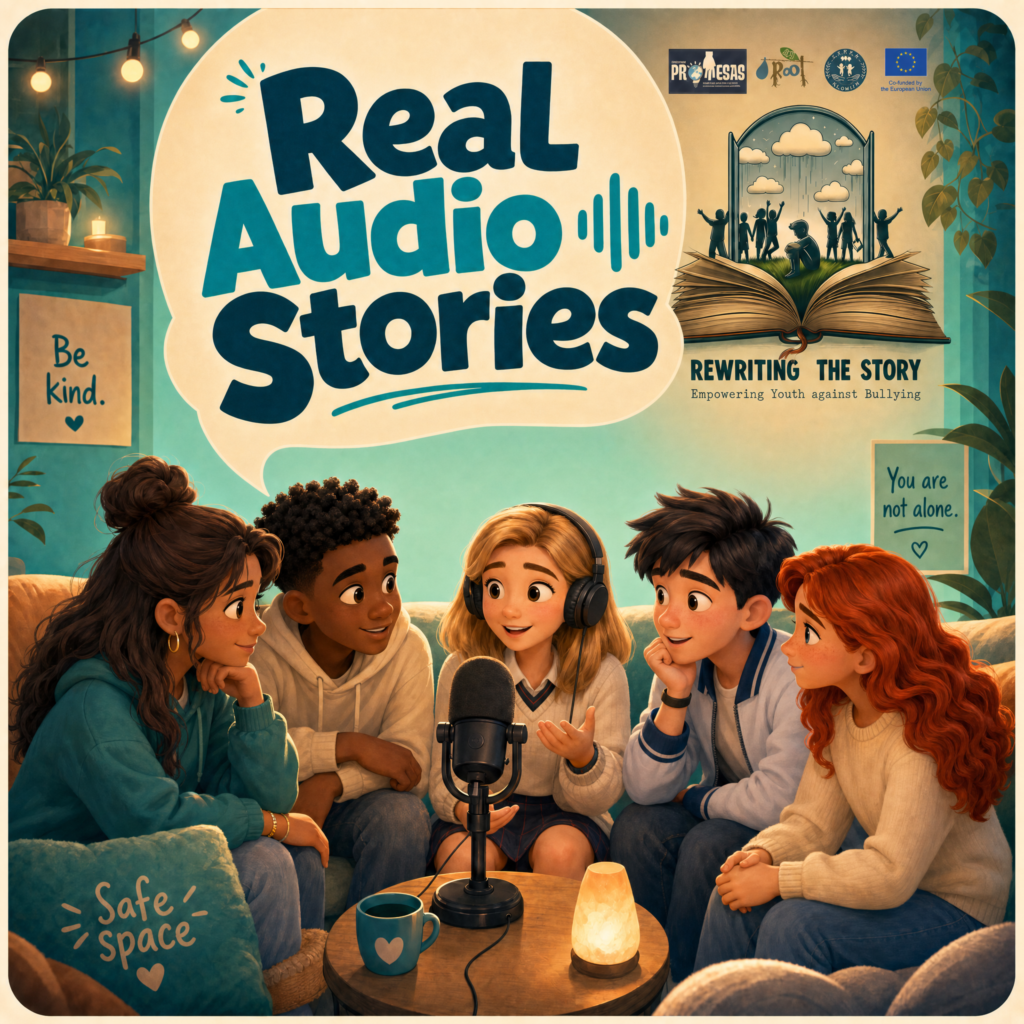
Audio Stories
about
A learning tool, not just a recording
Three things to know about how these stories were made and how you can use them in the classroom or in a workshop.
What are the Audio Stories?
A complete learning tool — each story bundles four layers:
- Short story in original language + English.
- Audio narrated by young people.
- Learning questions by educators.
- Reflection notes on the emotional case.
Where do they come from?
A European participatory process:
- 60+ real testimonies from ES, FR and RO.
- 15 young people per country selecting & recording.
- Goal: turn pain into education and active bystanders.
How can they be used?
A flexible resource for formal and non-formal settings:
-
Immersion exercises — step into
the protagonist's shoes. - Debate & reflection via learning questions.
- Multilingual — breaks barriers in diverse groups.
FOR EDUCATORS
From listening to action
Four steps to turn what you've just heard into a real change for someone else. Use these questions in workshops, classrooms or one-to-one conversations after each story.
FEEL
Start with what the story stirred in you. Don't rush past it.
- How did this audio make you feel — name the emotion before naming the lesson.
- What body sensations did you notice while listening? Where in the body did they sit?
- Did you recognise yourself in any character — victim, witness or aggressor?
ANALYSE
Look at the dynamics calmly. Who acts, who stays silent, who decides.
- At what moment could a different choice have changed everything?
- Who could have intervened — and why didn't they?
- What does this story tell us about the role of silence and rumour?
SOLVE
Look for possible answers — and name the obstacles honestly.
- What would you do differently if you could go back in time?
- What real obstacles make the obvious solution hard in your own context?
- Who in your community could be an ally for the protagonist?
ACT
Turn the emotion into a concrete first step. Small and real.
- Name one thing — small — you can do this week as an active bystander.
- Who is your one trusted person to talk to if you witness something similar?
- How will you remember this commitment after the workshop ends?