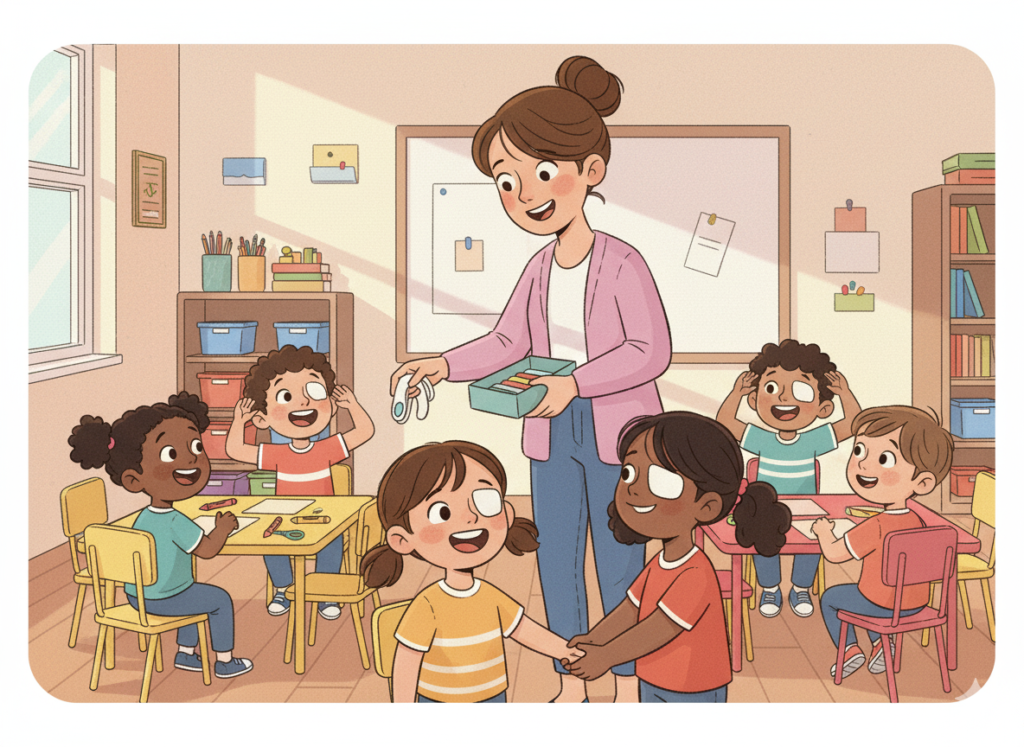
Preschool, Mexico, 1993. The room smells of play dough and juice in a sachet. The sun streaks in, there are worn crayons on the table and scissors rattling in a jar. A new girl appears with an eye patch and everyone looks at her curiously.
The patch helps her to correct her eyesight, but it hurts her when others say “crazy eye”, “pirate” or ask “why can’t you see me right?” To cut smoothly, she sometimes uses her left hand and closes one eye: she adapts as best she can. The worst thing is not the patch, but that the comments make her feel weird and alone. Until a teacher notices, talks to the family and the next day brings patches for everyone to try and left-handed scissors. The jokes don’t go away completely, but they go down. At least some of them understand, and the teachers learn to notice who needs support.
– “Pirate!”
– “It’s a healing patch, I want to try it too.”
– “Why do you cut like that?”
– “Because it works better for me that way. We’re all different.”
As a partner, what do I do to care and get noticed:
On the spot (10 s): If someone says “pirate,” I respond, “No, it’s a healing patch. No one here is making fun.”
Game for everyone: I propose to the group the “patch day”: everyone plays as he/she likes, with or without patch.
Helping hands: I offer my place if the light is too bright and ask for left-handed scissors for those who prefer it.
If teasing follows: I take his hand and say: “Let’s go with the teacher to tell what happened and look for solutions”.
Taking care of her every day: When she gets in line, I say her name nicely and invite her to make play dough. If she is tired, I accompany her to rest.
This way, the difference is not scary, and asking for help does not become shameful. Small gestures can lower the damage and create a real group.
Roles at the table: girl with patch, partner ally (narrator), boy who teases, class group, teacher, family.