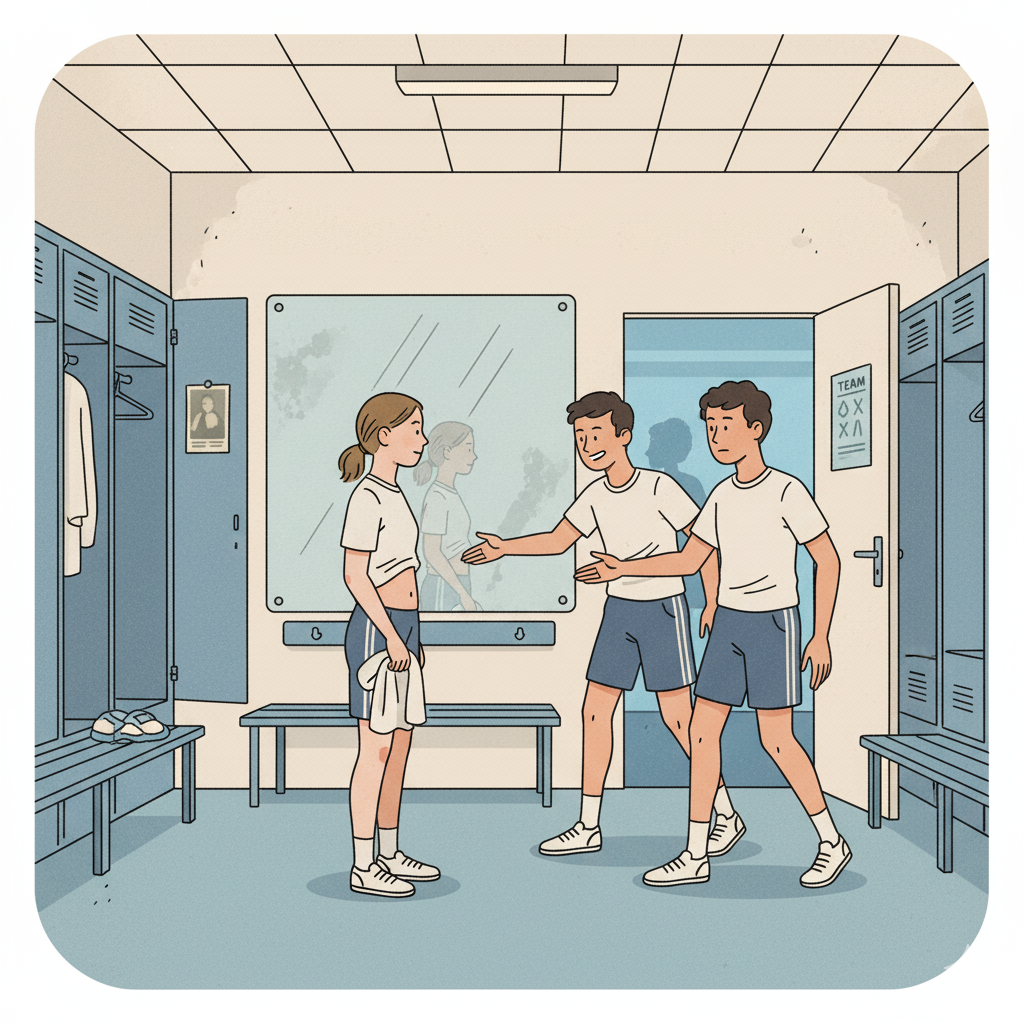
It was a training afternoon. The locker room smelled of shampoo and freshly used sneakers. There were mirrors that distorted you and, on the wall, an old photo from when I had left the team out of fear.
When I was little, I was called “the chubby one” in the team. At first it seemed like jokes, but then it turned into laughter, whispering and constant teasing. I began to hate my body and stopped going to training alone so I wouldn’t feel like the butt of all the jokes.
Years went by and I came back eager to play again… but also afraid. One of my teammates started laughing again and making comments. The coach didn’t notice and the rest of the team watched without doing anything. I feel that pressure again, like I’m the target again, and I don’t want to have to leave because of the teasing.
– “It’s just teasing, don’t take it the wrong way.”
– “I don’t feel like playing if you humiliate me.”
As a player, ally or coach, what would you do today to get the person back to training without fear?
Propose:
1. Boundaries and safe body language in the locker room;
2. Clear signaling of teasing and visible support;
3. Team agreements on body and respect (rules, consequences, helpful signals).
What change would you make in the medium term to armor the club (inclusive sizes and locker rooms, body image talks, “weather captain” role)?
Roles at the table: player narrator, mocking partner, friend ally, coach, parent, passive bystander.