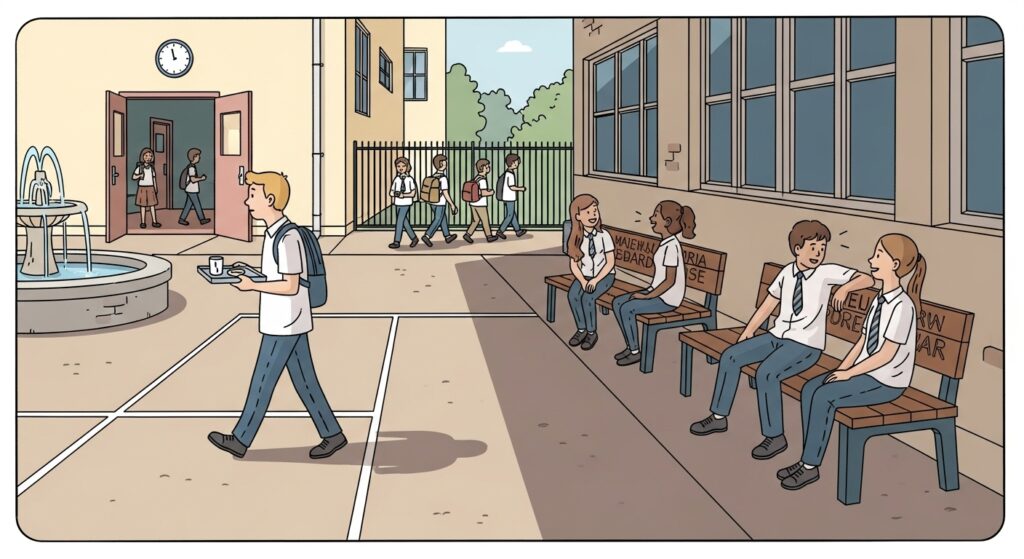
Era una tarde gris en el centro. En la dirección, la luz de los tubos hacía sombras largas sobre carpetas abiertas. El pasillo tenía olor a lluvia y a bolígrafo recién usado. El móvil vibraba y, al acercarte, notabas que las risas de los demás se apagaban de golpe, como si bajaran el volumen solo para que tú no pudieras oírlas.
It all started with a label: “bully”. That word was repeated for months, but you were never allowed to tell your story properly. The teachers and the management kept pushing, getting stricter and stricter, but without listening to all those who really knew what had happened. The rumor grew, it was sticking to your days and would not leave you alone, neither in the hallway nor in class.
And then came the worst: your boyfriend started bullying and threatening you. A friend wanted to take your side and also ended up receiving threats and even beatings. Underneath all this, there was something older: since you were little, in elementary and high school, you always heard jokes and weird looks because of the color of your skin. They said “it’s just humor”, but for you it was a wound that made you want to speak more and more quietly, without being heard.
Now everything was mixed up: an unfair accusation, intimate partner violence and racism that never healed.
— «Escuchen nuestra versión.»
— «No estamos para debatir.»
— «Si cuento, ¿me creerán?»
— «Si hablas de mí otra vez, te vas a enterar.»
— «¿De dónde eres… de verdad?»
— «De aquí. Y mi nombre se dice bien.»
Como compañero/a, delegado/a o tutor/a, ¿qué harías esta semana para reconectar sin forzar?
Diseña:
1. Hoy: invitación concreta (mesa, trabajo en pareja), regla de “silla abierta” en el grupo.
2. 48 h: microcírculo con 3–4 examigos para nombrar lo ocurrido y pactar gestos mínimos sostenibles.
3. 30 días: rituales de pertenencia (club/actividad, roles útiles de curso) y seguimiento.
Roles en mesa: narrador/a aislado/a, ex-amigo líder, seguidor/a indeciso/a, compañero/a aliado/a, tutor/a, orientador/a.