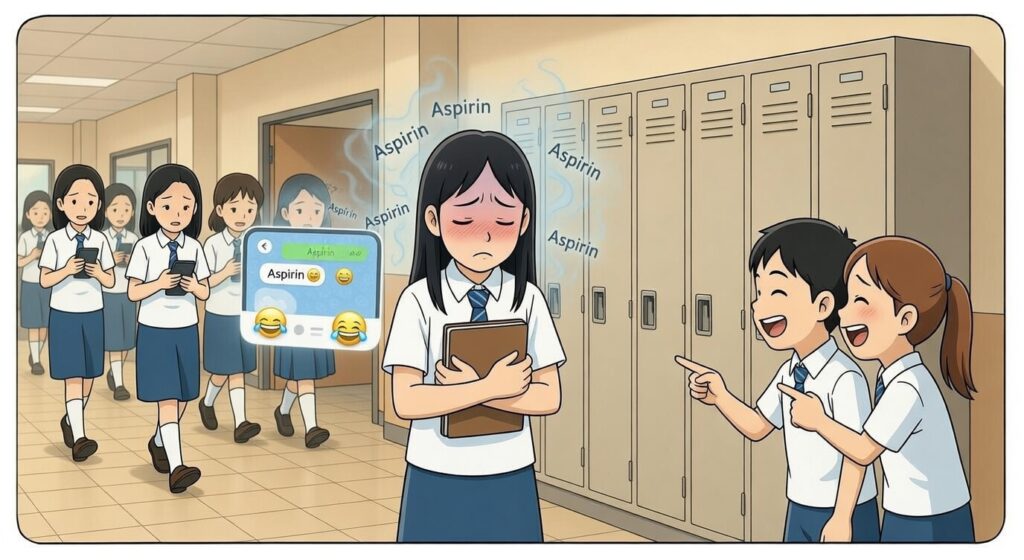
Afternoons two weeks in a row become long. The bedroom door is closed and the pillow gets wetter and wetter. In high school, the hallways smell of new binders and strong deodorant. As you pass, a nickname falls like a pebble on a pane of glass: “Aspirin…”
In 9th grade, two classmates invent the nickname “Aspirin”, with a hint that everyone understands although no one says it in public. The choir repeats it at every change of class and they also send it in the chat room. She looks down, keeps her notes quiet and is speechless. At home, her mother asks her why she is sad; shame prevents her from telling. She just wants to study quietly and finish the course well, but that borrowed name occupies her whole head and does not let her live.
– “Hey, Aspirin… will you take away our pain?”
– “I’m on a first-name basis.”
– “Just kidding.”
– “If it makes me cry every day, it’s no joke.”
I’m your partner and I’m with you today.
1. Now (10 s): I stand next to you: “Here we use the real name. You stop.
2. Bridge: I ask you how you want support (go together to tutoring/CPE, support partner in hallways).
3. In class: I ask for 1 minute for the name rule (no nicknames without permission; no innuendo).
4. Chat: I write “don’t forward/delete” and add two allies to hold it.
5. 24 h: record time/place and keep report; ask for no-contact and vigilance in “hot spots”.
6. Week 1: propose activity “The story of my name” and reminder of the anti-hate protocol. If the teacher minimizes, we look for another adult reference.
7. At home: if you want, I accompany you to tell your mother/orientation.
Roles at the table: affected student, initiator 1 of the nickname, initiator 2, chorus of peers, allied partner (narrator), tutor/CPE, guidance, mother.